
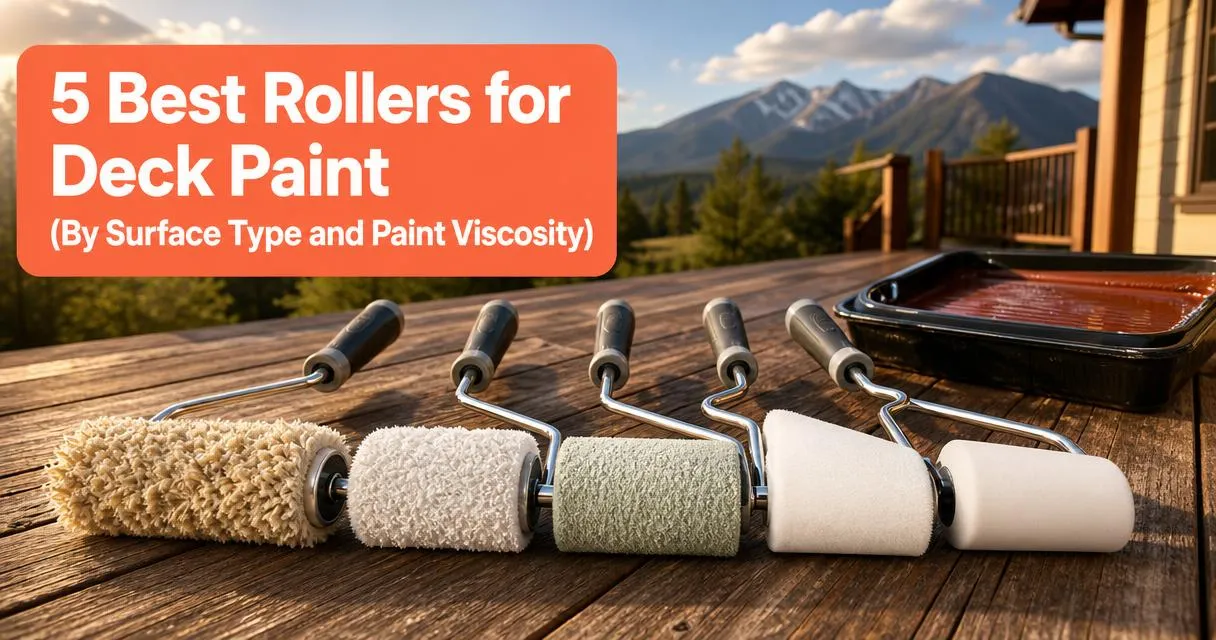
The roller you choose matters more than the brand of paint. A 3/4″ nap on smooth composite creates visible texture ridges. A 3/8″ nap on rough pressure-treated lumber leaves bare wood exposed.
Your deck’s surface texture and the thickness of your stain or paint decide which roller actually works.
Key Takeaways
- Grips rough weathered wood and holds enough thick solid-color stain to fill deep grain without constant reloading
- Delivers thin smooth coats on composite, fiberglass, or previously painted decks where texture would show as defects
- Holds more product per load than standard paint rollers, cutting trips to the tray and reducing drip waste
- Reaches tight spaces between boards, railing caps, and stair edges where standard rollers can’t fit
- Wastes paint on wrong naps through uneven absorption, drips from overloading, or extra coats to hide skips
- Splits the difference for standard wood decking that’s neither perfectly smooth nor heavily textured
- Mats down with oil-based products but works fine for water-based deck paints
Related Reading
Best exterior acrylic latex paint
A practical guide to acrylic-latex exterior paints and how their performance and textures pair with different deck…
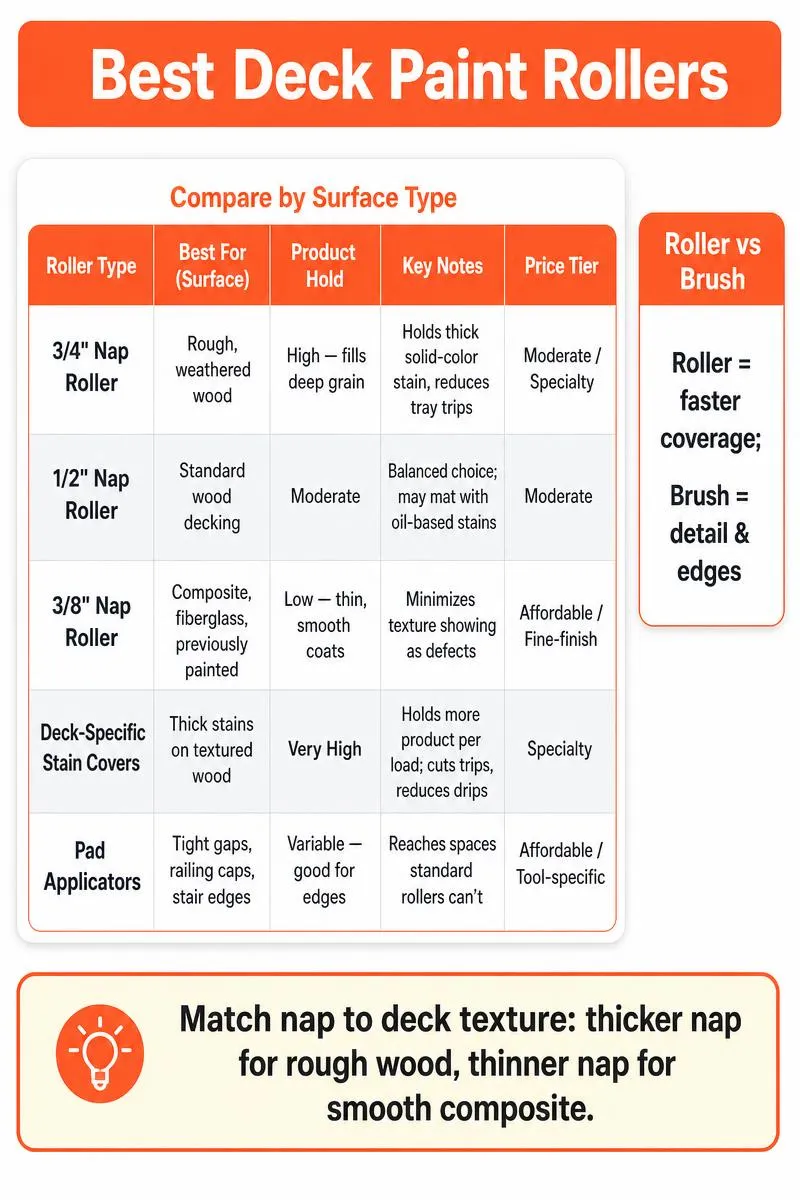
Best Roller For Deck Paint Side-by-Side
| Roller Type | Best For (Surface) | Product Hold | Key Notes | Price Tier |
|---|---|---|---|---|
| 3/4" Nap Roller | Rough, weathered wood | High — fills deep grain | Holds thick solid-color stain, reduces tray trips | Moderate / Specialty |
| 1/2" Nap Roller | Standard wood decking | Moderate | Balanced choice; may mat with oil-based stains | Moderate |
| 3/8" Nap Roller | Composite, fiberglass, previously painted | Low — thin, smooth coats | Minimizes texture showing as defects | Affordable / Fine-finish |
| Deck-Specific Stain Covers | Thick stains on textured wood | Very High | Holds more product per load; cuts trips, reduces drips | Specialty |
| Pad Applicators | Tight gaps, railing caps, stair edges | Variable — good for edges | Reaches spaces standard rollers can’t | Affordable / Tool-specific |
Roller 1: 3/4″ Nap Roller
Rough, pressure-treated, or weathered wood decks need the deep pile of a 3/4″ nap to reach into grain valleys and surface cracks. The longer fibers hold thick solid-color stains and heavy-bodied deck paints without releasing them too fast.
Prevents puddling and drips that happen when thin naps can’t absorb enough product.
This roller leaves visible texture on smooth surfaces. You’ll see nap marks on composite or previously painted decks that don’t have natural wood grain to hide the pattern. Match nap to deck condition, not the type of paint you bought.
If your pressure-treated boards still have ridged texture from the mill or show raised grain from weather exposure, a 3/4″ nap is your starting point.
Roller 2: 1/2″ Nap Roller
Most standard wood decking falls between perfectly smooth and heavily textured, making a 1/2″ nap the safe middle choice. This roller handles both semi-transparent stains and solid deck paints without the extremes of too much texture or too little paint capacity.
Works across multiple product types, so you don’t need separate rollers for a two-coat job with a semi-transparent base and solid topcoat. You’ll get even coverage on typical pine, cedar, or redwood boards installed for a season or two.
This is the all-purpose option when you’re not sure how rough your deck really is. Handles mixed textures from repairs or partial board replacements without switching tools.
Roller 3: 3/8″ Nap Roller
Smooth composite, fiberglass, or previously painted decks need the thin profile of a 3/8″ nap to avoid adding unwanted texture. Spreads water-based paints evenly because the thinner layer dries without showing roller marks or creating a bumpy surface that collects dirt.
This roller fails on rough lumber because the short fibers bridge over valleys instead of reaching down into them. Shows bare spots after drying, so you’ll end up doing three or four coats to build enough film thickness. That wastes more time and paint than buying the right nap size.
Use a 3/8″ nap when your surface is already sealed and smooth, not when you’re trying to cover raw wood grain.
Related Reading
Best uv resistant exterior paint
A focused look at UV-resistant formulas that help decks keep color and finish under strong sun exposure.

Roller 4: Deck-Specific Stain Roller Covers
Roller covers designed specifically for deck stain use denser foam or microfiber material that holds significantly more product than standard paint rollers. You’ll make fewer trips to the tray and spend less time bending over to reload.
Most deck stain rollers come in wider widths that cover more board area per pass. Releases stain slowly and evenly, reducing the drips and runs you get when a standard roller soaks up too much product and dumps it all at once.
Pair these with an extension pole and you can cover a large deck in half the time you’d spend with a shorter nap or narrower roller.
Roller 5: Pad Applicators
Pad applicators use a flat foam or fabric surface instead of a cylinder. Paints tight spaces between boards, the flat tops of railing caps, and stair edges where a round roller hits the wrong angle.
Gives you precise control for coating vertical and horizontal surfaces in the same stroke without rotating your wrist.
These don’t replace a roller for the main deck surface because they’re too slow and don’t hold enough paint for large flat areas. Use them as a supplement after rolling the field boards, or buy one specifically for railings and stairs if your deck has detail work.
Cleans up in seconds under a hose or faucet, faster than brushes.
Head-to-Head: Roller vs. Brush for Deck Paint
Rollers cover flat deck boards significantly faster than brushes and cause less arm fatigue over a full deck. Spreads paint without brush drag across rough wood grain for hours.
Brushes push paint deeper into wood grain and fill the gaps between boards better than rollers. Reaches cracks and corners that a roller skips over, especially on older decks with shrinkage gaps or cupped boards.
Most decks need both tools:
- Roll field boards in sections to cover large flat areas quickly
- Brush edges and seams immediately while paint is still wet to blend everything together
- Back-brush after each section to work paint into grain and smooth roller texture
Related Reading
Comparison of leading exterior paint brands to help readers choose compatible paint and roller combinations for deck…
Which Roller Should You Choose?
Match your roller to your deck’s surface condition:
- Rough pressure-treated decks with visible grain texture or weathered boards need a 3/4″ nap roller or deck-specific stain cover that fills the surface
- Smooth composite or fiberglass decks with a sealed surface work best with a 3/8″ nap for thin, even coats that don’t add texture
- Standard wood decks that aren’t brand-new but aren’t heavily weathered get the best results from a 1/2″ nap, especially with semi-transparent stain
- Decks with railings and stairs need a roller for main boards plus a pad applicator for tight spaces between boards and edges

How to Paint Decking Quickly With a Roller
Attach an extension pole to your roller frame before you start so you can stand upright and cover more area per stroke. Reduces back fatigue significantly, which matters more after the first hour when you’re halfway through a big deck.
Follow these steps for even coverage:
- Roll in sections of three to four boards at a time, working without stopping mid-section
- Maintain a wet edge between sections by overlapping your last stroke, preventing visible lap marks
- Back-brush after each section to work paint deeper into wood grain and smooth out roller texture
- Brush along the board direction, then move to the next section while the first is still wet enough to self-level
FAQs
Is it better to paint decking with a roller or brush?
Rollers cover the main deck boards faster, while brushes push paint into grain and fill gaps between boards. Most professional jobs use both: roll then brush while wet to blend everything.
What is the best way to apply decking paint?
Roll in 3-4 board sections with an extension pole, maintain a wet edge between sections, and back-brush while paint is still wet. Start at the far end and work toward your exit so you don’t paint yourself into a corner.
What is the best decking roller?
3/4″ nap for rough wood, 3/8″ nap for smooth composite or previously painted surfaces, or a deck-specific stain roller for large areas where you want fewer refill trips.
Can you use a foam roller for deck paint?
Foam rollers work for water-based paints but mat down and fall apart quickly with oil-based products or thick solid stains. They also don’t hold as much paint as microfiber or fabric rollers, so you’ll reload more often.
How do you clean deck paint rollers?
Rinse water-based paint immediately under a hose or faucet until water runs clear, then spin the roller to remove excess water. For oil-based paints, rinse with mineral spirits in a bucket, then wash with soap and water before the solvent dries.
Final Verdict
Match your nap size to your deck’s actual surface texture, not the type of paint you bought or the roller that was on sale. Solves most coverage problems before you open the paint can.
Buy two roller types if your deck has both flat field boards and tight detail areas. A standard roller for the main surface and a pad applicator for railings and stairs saves hours of painting time compared to brushing everything by hand.
Pick your roller based on the surface you’re actually painting, not what the package says works for decks in general.
Based in Denver, Colorado, we help homeowners across the Denver metro area choose the right tools and products before they start, or we can handle the whole project if you’d prefer to skip the prep work. If you’d rather hire it out, see our deck refinishing services for details on deck painting and preparation. Reach out at 720-831-8998 for guidance or a professional deck painting estimate.