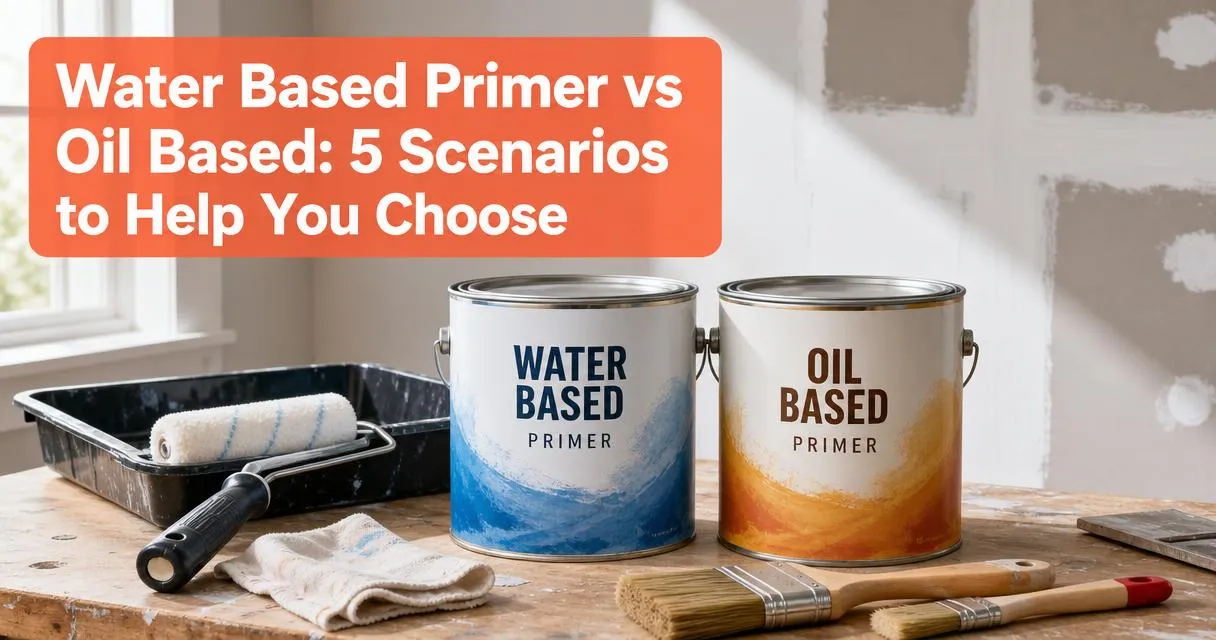
You’re standing in the paint aisle trying to decide between a $15 can of water-based primer and a $22 can of oil-based, and the labels aren’t helping. The truth is there’s no universal winner. The right primer depends on what you’re covering, what stains you’re hiding, and how fast you need to topcoat.
This guide compares adhesion, durability, VOCs, dry time, cleanup, and surface compatibility. You’ll pick the right formula and avoid common priming failures.
Key Takeaways
- Water-based primers dry fast for same-day topcoating and clean up with soap and water, making them the default for most interior DIY work
- Oil-based primers block tannin bleed and water stains that water-based formulas can’t seal, especially on cedar, redwood, and smoke-damaged surfaces
- Oil-based primer accepts both oil and latex topcoats, but water-based primer under oil-based paint requires surface prep and may not bond well
- Modern acrylic primers have closed the durability gap with alkyd formulas, though oil-based still edges ahead on glossy or previously stained surfaces
- Shellac-based primer seals severe stains and odors in situations where neither water nor oil primer performs well enough
- Oil-based primer requires mineral spirits cleanup and takes 4-8 hours to dry, adding cost and ventilation requirements
- Water-based formulas raise wood grain on bare wood, requiring light sanding before topcoating

Water Based Primer Vs Oil Based Quick Comparison
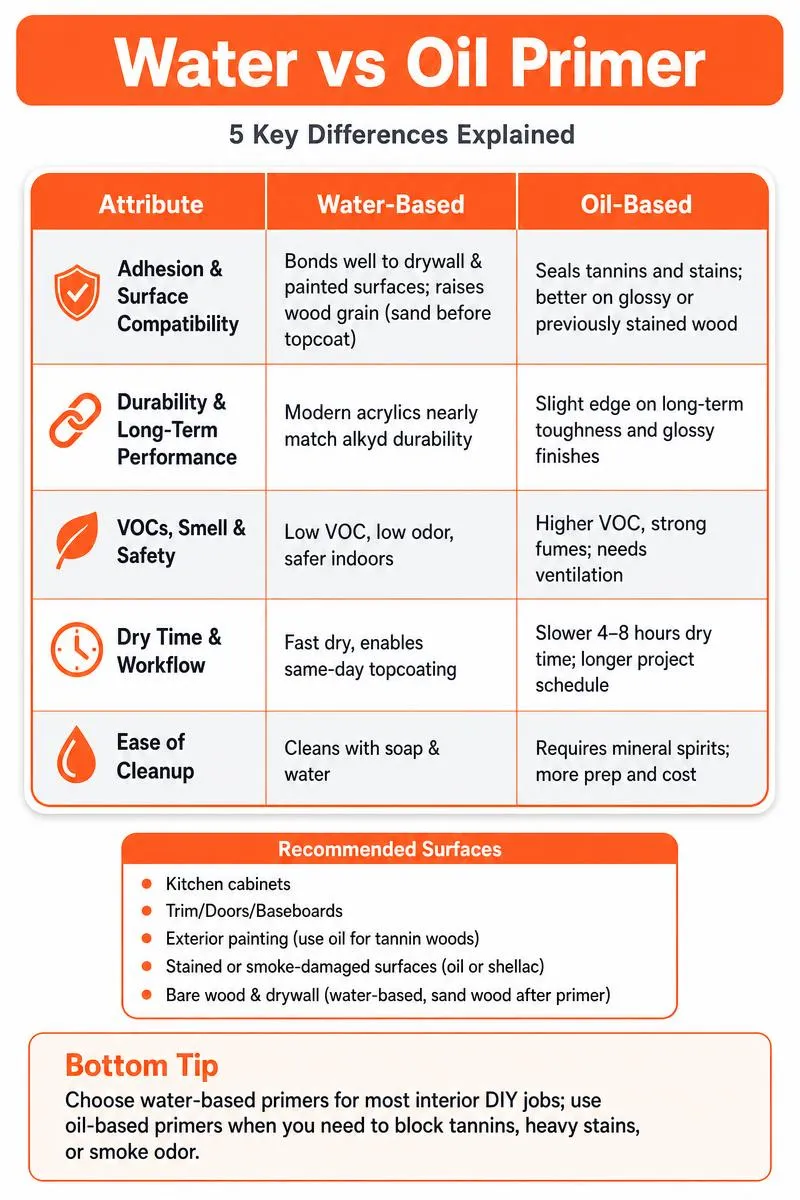
| Attribute | Water-Based | Oil-Based |
|---|---|---|
| Adhesion & Surface Compatibility | Bonds well to drywall & painted surfaces; raises wood grain (sand before topcoat) | Seals tannins & stains; better on glossy or previously stained wood |
| Durability & Long‑Term Performance | Modern acrylics nearly match alkyd durability | Slight edge on long‑term toughness & glossy finishes |
| VOCs, Smell & Safety | Low VOC, low odor, safer indoors | Higher VOC, strong fumes; needs ventilation |
| Dry Time & Workflow | Fast dry; enables same‑day topcoating | Slower 4–8 hours dry time; longer project schedule |
| Ease of Cleanup | Cleans with soap & water | Requires mineral spirits; more prep & cost |
Quick Comparison
Adhesion & Surface Compatibility
- Water-based primer bonds well to porous surfaces like drywall, bare wood, and masonry
- Oil-based primer bites into glossy and stained surfaces where water-based can’t adhere
Dry Time
- Water-based primer dries fast for same-day topcoating in warm conditions
- Oil-based primer requires overnight cure before you can apply topcoats
Cleanup
- Water-based primer offers simple soap-and-water cleanup in minutes
- Oil-based primer requires mineral spirits for brush and roller cleanup
VOCs & Smell
- Water-based primer produces low VOC and minimal odor for occupied spaces
- Oil-based primer releases high VOC with strong smell requiring ventilation
Stain Blocking
- Water-based primer handles light stains adequately but fails on tannins
- Oil-based primer seals water stains and tannin bleed effectively
Topcoat Flexibility
- Water-based primer works best under latex paints and needs prep under oil-based
- Oil-based primer accepts both oil and latex topcoats without issue
Related Reading
Explains when paint-and-primer-in-one is appropriate and whether a separate water- or oil-based primer is still needed…
What Is Water-Based Primer?
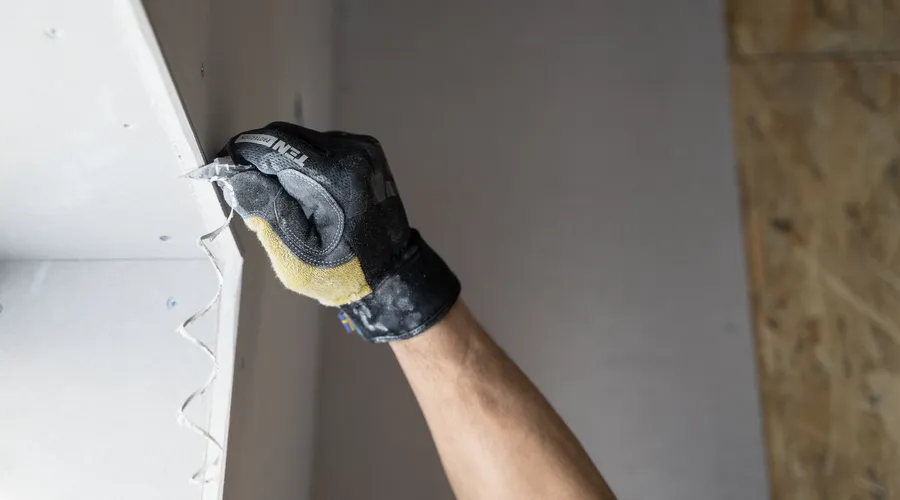
Water-based primers use acrylic or latex resins suspended in water instead of petroleum solvents. They produce minimal odor and carry low or zero VOC ratings. Most modern interior primers fall into this category.
These primers work best on several surface types:
- Drywall and bare softwoods where fast drying matters most
- Previously painted surfaces with sound existing paint
- Porous masonry that needs a sealing first coat
They dry fast enough to topcoat the same day. They’re also flexible enough to handle wood movement without cracking. If you’re priming new drywall or repainting a bedroom, water-based is usually the right call.
The main weaknesses show up on problem surfaces:
- Struggles to block tannins from cedar, redwood, and knotty pine
- Raises wood grain slightly, requiring light sanding before finish coats
- Weak adhesion on glossy surfaces unless you sand or use a bonding additive
What Is Oil-Based Primer?
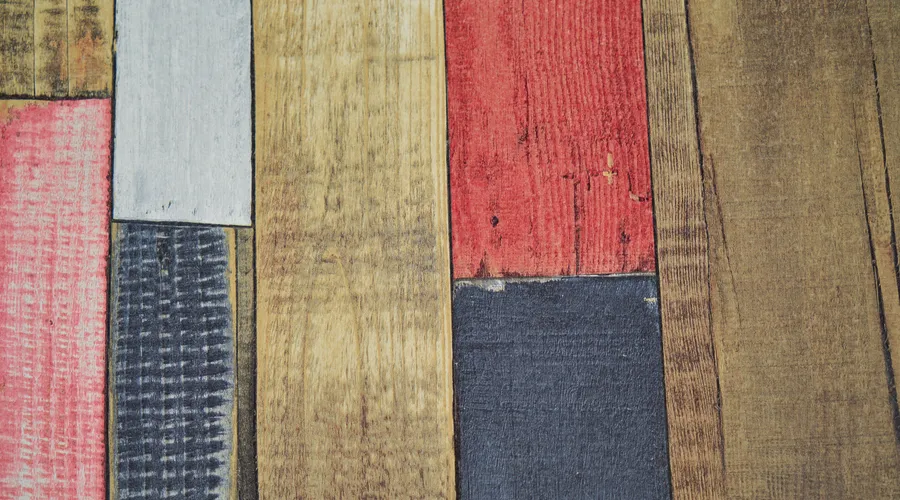
Oil-based primers rely on alkyd resins dissolved in mineral spirits or other petroleum solvents. They produce a harder, more adhesive film than water-based primers. These are the primers contractors reach for when dealing with stains, odors, or difficult surfaces.
Oil-based primer excels at several demanding tasks:
- Seals water stains and smoke damage that water-based formulas can’t touch
- Blocks pet odors and tannin bleed from resinous woods
- Bonds to glossy and slick surfaces like old enamel trim and laminate
If you’re covering nicotine stains or priming over dark wood paneling, oil-based delivers superior stain blocking.
The tradeoffs are real:
- Requires extended dry time and often needs overnight curing before topcoating
- Strong smell lingers for days, requiring ventilation and occupancy planning
- Cleanup requires mineral spirits, and disposal of rags carries fire hazards
- Some jurisdictions restrict or tax oil-based primers due to VOC content
Head-to-Head Comparison
Here’s how the two formulas stack up across the factors that matter most for DIY projects.
1. Adhesion & Surface Compatibility
On glossy, stained, or slick surfaces, oil-based primer bites in without sanding. It grips old enamel, laminate, and oil-painted trim without requiring aggressive prep. The alkyd resin bonds where water-based can’t on non-porous substrates.
Water-based works fine on porous surfaces like raw drywall, unfinished wood, and masonry. It soaks in slightly and bonds strongly to textured surfaces. If you’re priming bare drywall or new lumber, water-based adhesion is more than adequate.
For cabinets, trim, or doors with existing gloss paint, oil-based adhesion prevents peeling that shows up months later.
2. Durability & Long-Term Performance
Oil-based primer forms a harder film that resists abrasion and moisture better than water-based. On high-touch surfaces like door frames and baseboards, that extra hardness reduces wear-through over time.
Modern acrylic primers have closed the gap, though. Premium water-based formulas prevent cracking on wood substrates. Their UV resistance actually surpasses oil-based on exteriors.
For interior walls and ceilings, durability differences are negligible once you apply a quality topcoat. If you’re priming a surface that will take mechanical abuse or moisture exposure, oil-based still edges ahead on durability.
3. VOCs, Smell & Safety
Water-based primer wins decisively on health and safety. Low-VOC and zero-VOC formulas produce minimal odor and off-gas quickly. You can prime a bedroom in the morning and sleep in it that night without respiratory irritation.
Oil-based primers release high levels of volatile organic compounds. The solvent smell lingers for days and requires cross-ventilation. Some states restrict high-VOC primer sales or require compliant formulas.
If you’re working in an occupied home, water-based is the safer choice unless stain blocking demands oil-based.
4. Dry Time & Workflow
Water-based primer dries in 1-2 hours, allowing same-day topcoating in warm conditions. In warm, dry conditions, recoat times can drop to under an hour. This speed matters for weekend projects.
Oil-based primer requires 4-8 hours between coats. Full cure can take 24 hours or longer in cool or humid weather. This extends timelines and risks dust settling into wet primer.
For fast-turnaround DIY work, water-based keeps you moving.
5. Ease of Cleanup
Water-based cleanup requires only soap and water. Brushes, rollers, and spills rinse clean in minutes. You can wash tools in a utility sink and dispose of rinse water safely.
Oil-based cleanup demands mineral spirits or paint thinner. You’ll need to work brushes and rollers in solvent. You must also dispose of contaminated thinner properly and lay out oily rags flat to dry.
If you want to avoid hazardous waste handling, water-based is the clear winner.
Related Reading
Best exterior acrylic-latex paint
A closer look at acrylic-latex exterior paints — the common water-based option — and how they perform compared with…
Which Should You Choose?
The right primer depends on your specific surface and project conditions. Here are five common scenarios and the primer that performs best in each.
1. Kitchen Cabinets
Use oil-based primer for kitchen cabinets, especially if you’re painting over existing gloss or semi-gloss finishes. Oil-based bonds to slick enamel without sanding and blocks any tannin or stain bleed from the underlying wood. It also provides a harder base that resists moisture and grease cabinets endure.
If you’re using a water-based topcoat, oil-based primer accepts it without issue once fully cured. Sand lightly between primer and paint for best results.
2. Trim, Doors & Baseboards
Oil-based primer adheres to existing enamel on trim, doors, and baseboards better than water-based, especially if the surface has any sheen. It also produces a smoother base for gloss because it doesn’t raise grain or leave brush marks as easily.
If the trim is bare wood or previously painted with flat latex, water-based works fine and dries faster. But if you’re repainting glossy trim or dealing with knots and tannin bleed, oil-based prevents peeling and staining that show up months later.
3. Exterior Painting
Water-based primer outperforms oil-based on exteriors because acrylic formulas flex with temperature swings. They also resist UV degradation better than alkyds. Oil-based primers can become brittle over time and crack as wood expands and contracts with moisture.
Modern exterior acrylic primers also dry faster. This reduces rain and dew damage during application. Unless you’re covering severe tannin bleed on cedar siding, water-based is the better exterior choice.
4. Stained or Smelly Surfaces
Oil-based or shellac primer blocks stains water-based can’t seal. Water-based primers fail on several problem surfaces:
- Can’t seal tannin bleed from redwood or cedar
- Can’t block nicotine bleed-through from smoke-damaged walls
- Can’t seal water stains that reappear through topcoats
If you try to cover these with water-based, stains reappear through your topcoat within weeks.
For severe cases like fire or smoke damage, shellac-based primers outperform even oil-based by sealing odors and stains that penetrate deeper into the substrate.
5. Bare Wood & Drywall
Water-based primer is the best choice for bare drywall and most bare wood unless you’re dealing with resinous species. It dries fast, sands easily, and provides excellent adhesion for latex. The slight grain raise it causes on wood is easy to knock down with 220-grit sandpaper.
For high-tannin woods like pine, cedar, or redwood, switch to oil-based or shellac to prevent bleed-through. But for poplar, maple, or MDF trim, water-based saves time and cleanup without sacrificing performance.
Common Mistakes to Avoid
Even experienced DIYers make priming errors that lead to peeling, staining, or adhesion failure. Here are four mistakes that cause the most problems.
1. Using the Wrong Topcoat Over Primer
Applying water-based paint over oil-based primer before it’s fully cured can cause adhesion problems. Oil-based primer needs at least 4-8 hours to dry to the touch and often 24 hours to cure. If you rush the process, the paint can’t bond and may peel.
The reverse is also risky. Applying oil-based paint over water-based primer works, but only if the primer is fully dry and you’ve chosen a compatible formula. Always check manufacturer recoat windows before proceeding.
2. Skipping Surface Prep
Primer improves adhesion and blocks stains, but it doesn’t replace cleaning or sanding. Dirt, grease, and loose paint prevent primer from bonding regardless of formula. If you prime over glossy surfaces without scuffing them first, even oil-based primer can fail.
Proper surface prep requires several steps:
- Clean with TSP or degreaser to remove contamination
- Sand glossy areas to create mechanical tooth
- Remove all flaking paint before priming starts
Primer enhances a properly prepped surface but can’t fix a poorly prepped one.
3. Applying Too Thick or Too Thin
Oil-based primer applied too thick shows brush marks and dries slowly. Water-based applied too thin fails to hide underlying color or provide adequate stain blocking. Aim for uniform coverage that hides the substrate without leaving heavy texture.
Most primers perform best at a spread rate of 350-400 square feet per gallon. If you’re covering significantly more or less, you’re probably applying it wrong.
4. Assuming “Enamel” Means Oil-Based
Modern enamel paints are often water-based acrylic formulas that dry to a hard, glossy finish. The term “enamel” refers to the finish characteristics, not the solvent base. Check the label for cleanup instructions to determine whether a product is oil or water-based.
This matters because water-based enamels require compatible primers and don’t need the ventilation or cleanup protocols that oil-based enamels demand.
FAQs
What are the disadvantages of water-based primers?
Water-based primers raise wood grain slightly, requiring sanding before topcoating. They also struggle to block tannin bleed from resinous woods like cedar and redwood. They can’t seal water stains or smoke damage as effectively as oil-based. On glossy or slick surfaces, adhesion may be weaker unless you use a bonding primer or sand first.
Can I use water-based primer under oil-based paint?
Yes, but the water-based primer must be fully dry and you should scuff-sand it lightly before applying oil-based paint. The bond won’t be as strong as oil-based primer under oil-based paint. Some manufacturers recommend against this combination on high-wear surfaces like trim or cabinets.
When should you use oil-based primer?
Use oil-based primer when you need to:
- Seal water stains and smoke damage that water-based can’t block
- Block tannin bleed from cedar, redwood, or knotty pine
- Bond to glossy surfaces without heavy sanding
- Adhere to existing enamel on cabinets and trim
Can I put regular latex paint over oil-based primer?
Yes, latex paint bonds well to fully cured oil-based primer. Let the primer dry for at least 24 hours before topcoating, and make sure it’s dust-free. The oil-based primer provides excellent adhesion and stain blocking, while the latex topcoat delivers easy application and cleanup.
Can I use water-based primer on bare wood?
Water-based primer works well on bare wood like poplar, maple, and MDF. It will raise the grain slightly, so plan to sand with 220-grit paper before topcoating. Avoid water-based on resinous woods like pine, cedar, or redwood unless the product specifically blocks tannins.
Is oil-based primer banned or restricted?
Some states and regions restrict or tax oil-based primers due to high VOC content. California, for example, limits VOC levels in architectural coatings, which has reduced availability of traditional oil-based primers. Check local regulations before purchasing. If restrictions apply, look for compliant low-VOC alkyd formulas.
Final Verdict
Default to water-based primer for most interior DIY projects. It dries fast, cleans up easily, and performs well on most interior surfaces. The low odor and minimal VOCs make it safer for occupied homes.
Modern acrylic formulas deliver durability rivaling oil-based on typical interior applications. Switch to oil-based when you’re covering stains, odors, tannin-bleeding wood, or glossy surfaces.
The superior blocking power and adhesion on problem surfaces justify the longer dry time and solvent cleanup. For severe stain and odor issues, consider shellac-based primers that outperform both water and oil formulas.
Before you buy, identify your surface type and check for stains, bleed-through risk, or existing glossy finishes. That assessment prevents repainting failures when stains reappear or topcoats peel.
Based in Denver, we help Colorado homeowners in the Denver metro area pick the right primer and paint system for their specific surfaces and conditions. If your project is inside the house, take a look at our interior painting services to see how we handle primer selection and prep. Not sure which primer your project needs? Give us a call at 720-831-8998 and we’ll point you in the right direction before you start.