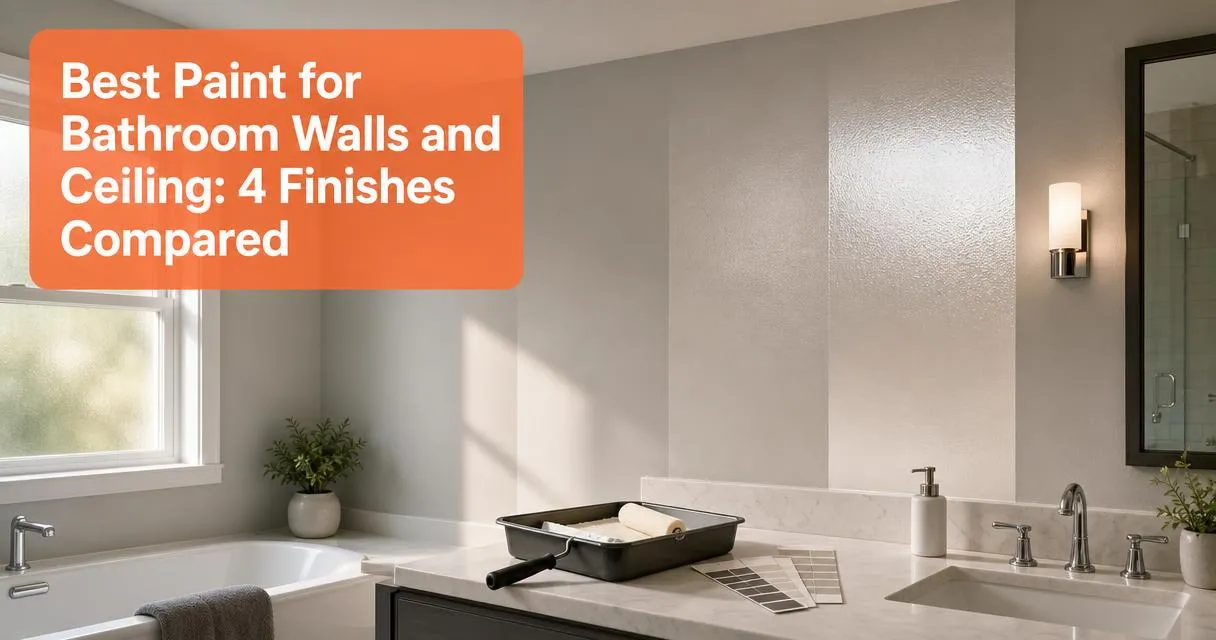
Bathroom paint faces steam, condensation, and mildew. The finish you choose matters more than the brand for long-term durability. Picking the wrong sheen can mean scrubbing mold or repainting in two years.
This guide compares four paint finishes for bathroom walls and ceilings so you know exactly what works in humid spaces.
Key Takeaways
- Satin finish offers the best balance for most bathroom walls with moderate moisture resistance and a soft sheen that hides minor imperfections
- Semi-gloss and high-gloss resist moisture best but show every wall flaw, making them better for trim, doors, and areas directly near showers
- Flat or matte finish works on ceilings only if you have good ventilation and pair it with a mold-resistant primer like Zinsser Mold & Mildew
- Always prime bathroom surfaces with a stain-blocking, mold-resistant primer even if the paint says self-priming
- High-gloss delivers maximum protection in very high-moisture zones but looks harsh on large wall areas
- Poorly ventilated bathrooms need semi-gloss walls and a quality primer on flat ceilings to prevent mildew growth
- Sherwin Williams ProClassic and Bath Paint lines perform consistently in steamy conditions across multiple finish types
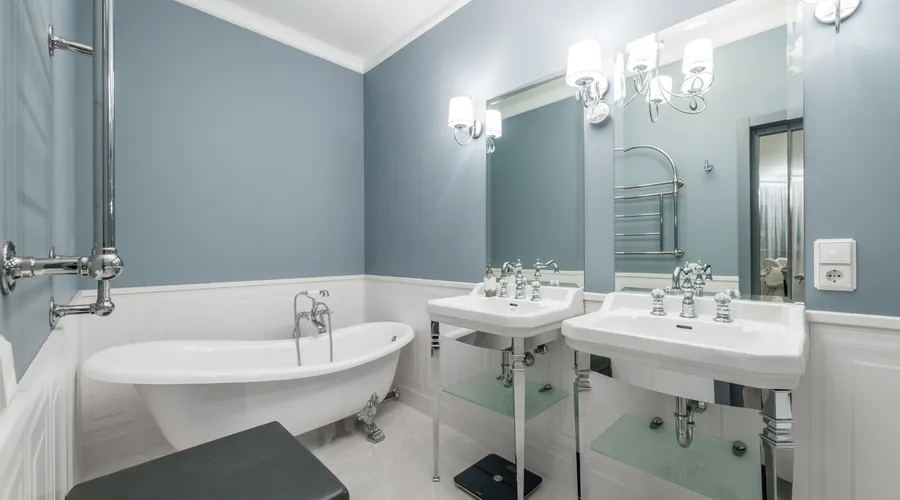
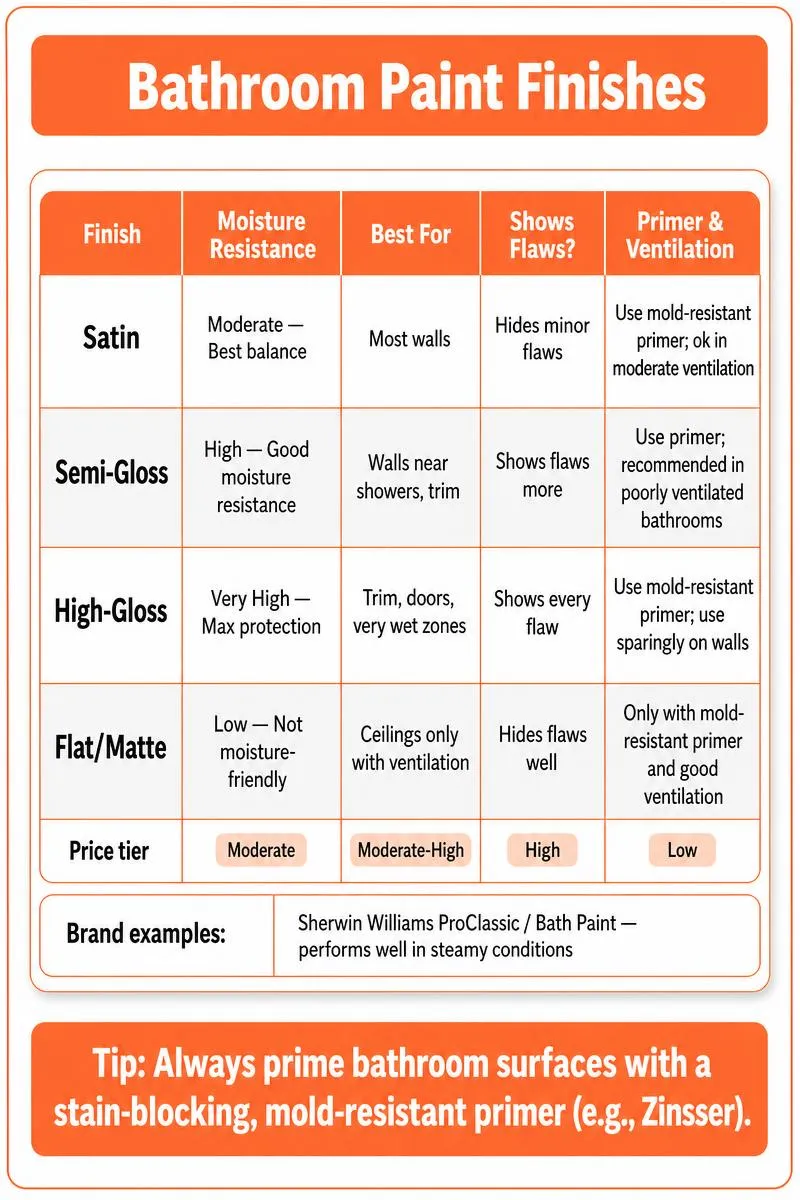
Best Paint For Bathroom Walls And Ceiling at a Glance
| Finish | Moisture Resistance | Best For | Shows Flaws? | Primer & Ventilation |
|---|---|---|---|---|
| Satin | Moderate — Best balance | Most walls | Hides minor flaws | Use mold-resistant primer; ok in moderate ventilation |
| Semi-Gloss | High — Good moisture resistance | Walls near showers, trim | Shows flaws more | Use primer; recommended in poor ventilation |
| High-Gloss | Very High — Max protection | Trim, doors, very wet zones | Shows every flaw | Use mold-resistant primer; use sparingly on walls |
| Flat/Matte | Low — Not moisture-friendly | Ceilings only with ventilation | Hides flaws well | Only with mold-resistant primer and good ventilation |
Semi-Gloss Finish
Semi-gloss delivers high moisture resistance and wipes clean easily, making it ideal for trim, doors, and accent walls near the shower. The glossy surface reflects light and repels water better than lower-sheen options. It also highlights every ding, patch, and texture flaw in your drywall.
This finish works well in full bathrooms with poor ventilation where steam lingers. Moisture beads off the surface instead of soaking in. You can scrub soap scum or toothpaste splatters without damaging the paint.
If your walls aren’t perfectly smooth or you’ve patched holes before repainting, the shine will show those repairs. Sherwin Williams ProClassic or their dedicated Bath Paint line both perform well in semi-gloss. You’ll get better mold resistance and durability than standard interior paints, and the slightly harder finish stands up to repeated cleaning.
Related Reading
Best stain resistant interior paint
A guide to the most stain-resistant interior paints and how they hold up in high-moisture rooms like bathrooms.
Satin Finish
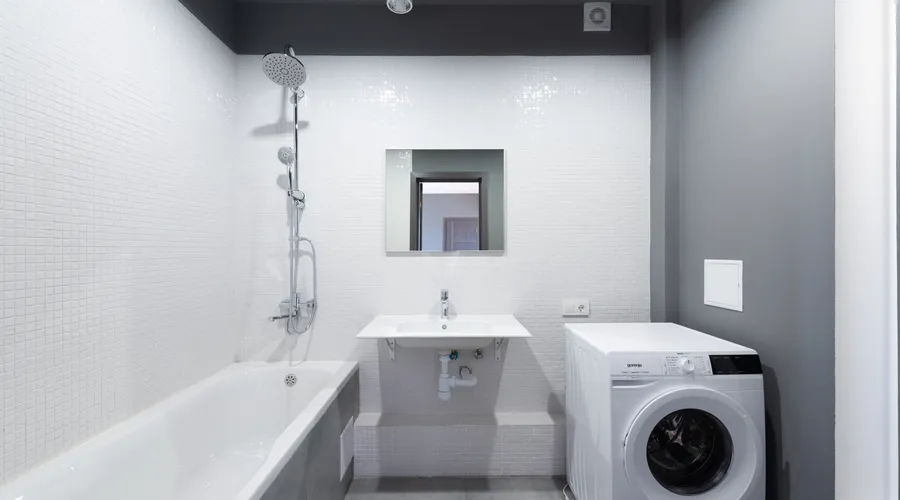
Satin strikes the best balance for most bathroom walls with moderate moisture resistance, a soft sheen, and enough texture-hiding ability to forgive minor wall imperfections. This finish looks less clinical than semi-gloss while still handling humidity in half-baths and full bathrooms with decent exhaust fans.
The subtle sheen reflects some light without the harsh glare of glossier finishes. Satin cleans easily with a damp cloth, though it won’t tolerate as much aggressive scrubbing as semi-gloss.
If your bathroom has an exhaust fan that you actually use during showers and after, satin will hold up fine. This is the finish most homeowners choose because it looks like regular wall paint while still resisting moisture better than flat. It works in powder rooms, guest baths, and primary bathrooms that don’t turn into saunas.
High-Gloss Finish
High-gloss provides maximum moisture protection and wipes completely clean, but it highlights every single surface flaw like a spotlight. This finish belongs on cabinetry, trim, and very high-moisture zones right next to the tub or shower, not covering entire walls.
The glass-like surface repels water better than any other finish, making it ideal for areas that get direct spray or constant condensation. You can scrub it hard without dulling the shine.
The tradeoff is that any texture, patch, dent, or uneven drywall compound becomes obvious under the reflective surface. High-gloss looks sharp on bathroom vanities, window trim, and wainscoting. Using it on full walls creates a sterile, institutional look unless your walls are flawlessly smooth and you want that modern, high-shine aesthetic.
For most residential bathrooms, it’s overkill on large surfaces.
Flat or Matte Finish
Flat paint hides imperfections better than any other finish but offers the least moisture resistance, making it viable only for ceilings and low-traffic bathroom walls with good ventilation. The non-reflective surface masks texture variations, patched spots, and minor drywall flaws that would show up under glossier finishes.
This finish absorbs moisture instead of repelling it. Without proper ventilation and a quality mold-resistant primer, you’ll see mildew spots within months.
Flat paint works on bathroom ceilings because ceilings don’t get splashed directly and aren’t usually scrubbed, but only if your exhaust fan actually vents outside and gets used consistently. Pair flat finish with Zinsser Mold & Mildew primer or use a dedicated product like Zinsser Bathroom Ceiling Paint. Never use flat on shower walls or anywhere near the tub.
It’s fine in powder rooms with no shower and in well-ventilated spaces where steam dissipates quickly.
Related Reading
A comparison of paint-and-primer formulas that can save steps and improve coverage in bathroom repaint projects.
Walls vs Ceiling: Which Finish Where
Your walls and ceiling face different moisture challenges and need different finishes to perform well. Walls get more direct contact with steam, splashes, and hands, while ceilings mainly handle ambient humidity.
Choose satin for walls if you have decent ventilation, or upgrade to semi-gloss if your bathroom stays steamy and your exhaust fan is weak or nonexistent. Your walls need more moisture protection than your ceiling because they face more direct contact.
For ceilings, flat or matte finish paired with a mold-resistant primer handles the job in most bathrooms. The primer does the heavy lifting for mildew prevention while the flat finish hides the texture and imperfections common on ceilings. If you have serious ventilation problems or take very hot showers in a small bathroom, consider Zinsser Bathroom Ceiling Paint designed specifically for high-humidity overhead surfaces.
Painting your ceiling the same color as your walls creates a unified look that makes small bathrooms feel larger. A darker ceiling visually shrinks the room and can feel cave-like in a windowless bathroom. White or light-colored flat ceilings reflect light and keep the space feeling open even when you use a bolder wall color.
Primer Matters: Don’t Skip It
Every bathroom surface needs a stain-blocking, mold-resistant primer before paint goes on, regardless of what the paint label claims about self-priming formulas. Bathrooms face moisture challenges that living rooms don’t. Primer creates a barrier that prevents mildew from taking hold and stops old stains from bleeding through.
Zinsser Mold & Mildew primer works on walls and ceilings with an antimicrobial formula that resists mold growth. For a water-based option that’s easier to clean up, Bulls Eye 1-2-3 blocks stains and provides good moisture resistance. Both products prep the surface so your topcoat adheres properly and lasts years longer.
Prime even over existing paint if you’re repainting a bathroom. Old moisture stains, soap residue, and mildew spores can interfere with new paint adhesion. One coat of quality primer costs less than repainting the whole room in two years when mold spots appear.
Which Should You Choose?
Your bathroom’s ventilation, moisture level, and wall condition determine the right finish combination:
- Steamy full bath with poor ventilation: Semi-gloss on the walls to handle constant moisture and a flat ceiling with mold-resistant primer. The glossy walls repel steam while the primed ceiling resists mildew even when humidity lingers.
- Half-bath or powder room with no shower: Satin walls and any finish ceiling work fine since moisture levels stay low. You get a softer look without sacrificing durability for the light bathroom use these spaces see.
- Rental or budget refreshes: Satin walls and flat ceilings over one coat of quality primer. This combination costs less than premium high-gloss products while still delivering decent moisture protection for average bathroom conditions.
- High-end remodels: Satin walls, high-gloss trim and cabinetry, and Zinsser ceiling paint designed for bathrooms. This layered approach puts each finish where it performs best rather than using one product everywhere.
Related Reading
Best interior caulk for painting
Practical recommendations for caulks to seal gaps around trim and fixtures before painting bathroom walls and ceilings.
FAQs
What kind of paint is best for high humidity bathrooms?
Semi-gloss or satin finish with a mold-resistant primer handles high humidity best. Semi-gloss repels more moisture but shows wall flaws, while satin offers better appearance with slightly less protection. Both outperform flat finishes in steamy conditions.
What is the best moisture-resistant paint for bathroom ceilings?
Flat or matte finish over Zinsser Mold & Mildew primer works for most bathroom ceilings. For very humid bathrooms, Zinsser makes a dedicated Bathroom Ceiling Paint with built-in mildew resistance that performs better than standard flat paint.
What type of paint finish is best for bathroom walls?
Satin finish balances moisture resistance with appearance for most bathroom walls. Upgrade to semi-gloss if your bathroom has poor ventilation or stays steamy, since the glossier surface repels water better even though it shows imperfections more clearly.
Should I paint my bathroom ceiling the same color as the walls?
Painting the ceiling the same color as the walls unifies small bathrooms and makes them feel larger. Darker ceilings shrink the space visually and can feel oppressive in windowless bathrooms, so stick with white or light colors overhead unless you have high ceilings and good natural light.
Do I need special paint for a steamy bathroom ceiling?
You need either quality mold-resistant primer under regular paint or a dedicated bathroom ceiling paint if your bathroom gets very steamy. Standard flat paint without primer will grow mildew quickly in high-moisture environments even if it’s labeled as interior paint.
Is waterproof paint necessary for bathroom ceilings?
True waterproof paint isn’t necessary for ceilings since they don’t get direct water contact. Moisture-resistant primer with mold inhibitors under flat or matte paint handles ceiling humidity. Save waterproof coatings for shower walls and other surfaces that get splashed directly.
Final Verdict
Satin finish on walls and flat or matte with mold-resistant primer on ceilings gives you the best all-around performance for most bathrooms. This combination looks good, cleans easily, and resists moisture without highlighting every wall flaw or costing as much as premium high-gloss products.
Upgrade to semi-gloss walls if your bathroom ventilation is poor or you have a small space that traps steam. The extra moisture resistance outweighs the slightly harsher appearance when you’re preventing mold growth. Always prime with a product specifically designed to block stains and resist mildew, even if your paint label says it doesn’t need primer.
Start by checking your exhaust fan, then choose your finish based on how steamy your bathroom actually gets. The right paint finish matched to your ventilation situation will last years without peeling, staining, or growing mildew.
Based in Denver and serving homeowners across the Denver metro area, we help you pick the right paint for every room, including humid spaces like bathrooms. If you would like hands-on help choosing the best finish and paint type for your bathroom, see our interior painting services. Call us at 720-831-8998 and we’ll walk you through the options.