
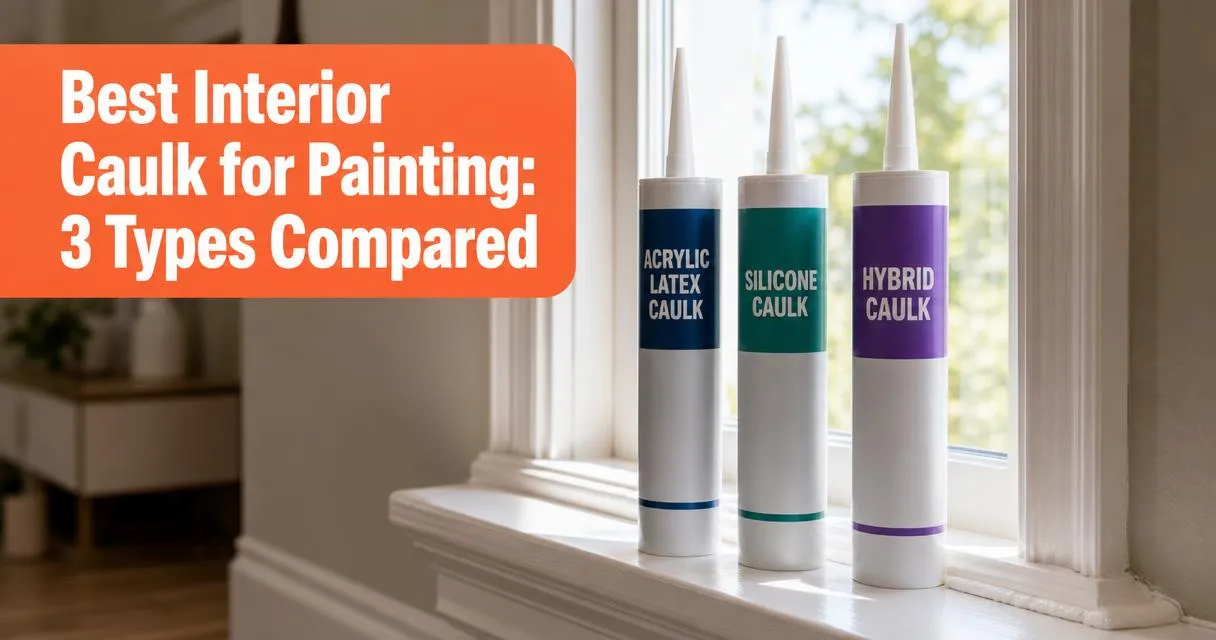
Pick the wrong caulk before painting and you’ll watch paint peel away from the bead within months. You may also see gaps reopen as the filler shrinks back into the joint. The caulk you choose determines whether your trim work stays smooth or becomes a maintenance headache.
Key Takeaways
- Acrylic latex caulk is the best all-purpose choice for painted trim, baseboards, and small drywall seams where movement is minimal
- Silicone-acrylic blends stay flexible while accepting paint, making them ideal for kitchens, bathrooms, and trim that expands seasonally
- Elastomeric caulk like Big Stretch fills wide gaps without shrinking, especially crown molding and settling cracks up to 1/2 inch
- Pure silicone repels paint completely, causing adhesion failure no matter how long you wait to coat it
- Acrylic latex dries fastest for painting, often within 30 minutes to 2 hours, while blends and elastomeric formulas need 24 hours or more
- Match caulk to gap size and movement: standard trim gets acrylic latex, moving joints need elastomeric, and hybrid blends split the difference
Best Interior Caulk For Painting Quick Comparison
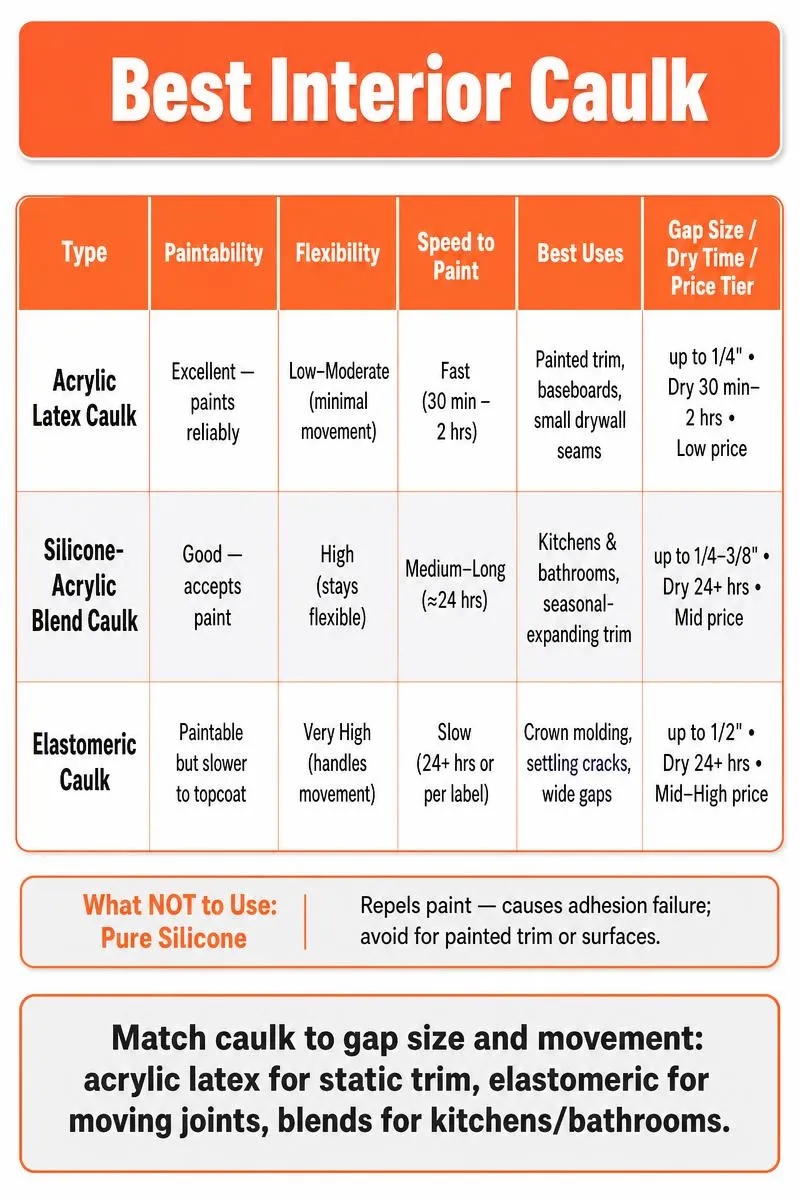
| Type | Paintability | Flexibility | Speed to Paint | Best Uses | Gap Size / Dry Time / Price |
|---|---|---|---|---|---|
| Acrylic Latex Caulk | Excellent — paints reliably | Low–Moderate | Fast (30 min–2 hrs) | Painted trim, baseboards, small drywall seams | Up to 1/4″ • Dry 30 min–2 hrs • Low |
| Silicone-Acrylic Blend Caulk | Good — accepts paint | High | Medium–Long (≈24 hrs) | Kitchens & bathrooms, seasonal-expanding trim | Up to 1/4–3/8″ • Dry 24+ hrs • Mid |
| Elastomeric Caulk | Paintable but slower | Very High | Slow (24+ hrs or per label) | Crown molding, settling cracks, wide gaps | Up to 1/2″ • Dry 24+ hrs • Mid–High |
| What NOT to Use: Pure Silicone | Repels paint | Flexible | Not paintable | Avoid for painted trim | Causes adhesion failure |
Quick Comparison
- Acrylic latex caulk offers the fastest path to painting, typically within 30 minutes to 2 hours, and adheres to drywall and wood. It works best on gaps under 1/4 inch that don’t experience seasonal expansion, though moderate shrinkage and limited flexibility are tradeoffs.
- Silicone-acrylic blend caulk extends cure time to 24 hours or more but adds significant joint flexibility while staying paintable. It handles bathroom humidity and kitchen temperature swings better than pure acrylic, at a higher cost per tube.
- Elastomeric caulk stretches up to 500% of its original width, making it a reliable choice for wide gaps and crown molding corners wider than 3/8 inch. The thick consistency requires more tooling effort, and most formulas need 24-48 hours before accepting paint.
Related Reading
A detailed guide to paints, sheens, and trim prep that helps readers choose complementary caulk and paint for clean…
What Is Acrylic Latex Caulk?
Acrylic latex caulk is a water-based formula that dries through evaporation, leaving a firm but slightly flexible bead. Contractors call it painter’s caulk because it accepts paint without priming. You can clean excess with soap and water before it skins over, which happens in 10-15 minutes.
This formula works best on:
- Trim-to-wall joints and baseboard seams where the gap measures less than 1/4 inch and movement is minimal
- Small drywall cracks where surfaces stay stable
- Primed wood, drywall, and previously painted surfaces where adhesion is reliable
You’ll get a smooth bead that feathers easily with a wet finger or caulk tool.
The main weakness shows up over time. The bead shrinks slightly and loses flexibility, so joints with seasonal movement may develop hairline cracks after a year or two. Acrylic latex won’t hold up as well as hybrid formulas in bathrooms or rooms with temperature extremes.

What Is Silicone-Acrylic Blend Caulk?
Silicone-acrylic blend caulk combines the flexibility of silicone with the paintability of acrylic latex. The silicone component keeps the bead elastic long after it cures, while the acrylic side ensures paint bonds without peeling. You still get water cleanup during application, though the window closes faster than pure acrylic.
This hybrid works best in:
- Kitchens and bathrooms where humidity fluctuates constantly
- Trim that moves with seasonal humidity changes
- Baseboards along exterior walls that flex with temperature swings
The added flexibility means joints stay sealed even when wood swells in summer or shrinks in winter.
Most silicone-acrylic blends need 24 hours before you can paint over them, compared to 30 minutes to 2 hours for basic acrylic latex. You’ll also pay more per tube, but the investment pays off in bathrooms and high-movement areas where pure acrylic cracks prematurely within months.

What Is Elastomeric Caulk?
Elastomeric caulk is a high-stretch formula engineered to fill gaps up to 1/2 inch wide and remain flexible through extreme joint movement. Big Stretch is the most recognized brand, but several manufacturers now offer similar formulas that stretch without cracking or tearing. The thick consistency looks and applies more like cake frosting than traditional caulk.
This type excels at:
- Crown molding corners where wood joints shift as the house settles
- Larger gaps where standard caulk would shrink back into the void
- Settling cracks in drywall and door frame corners that show seasonal movement
- Joints that need to absorb expansion instead of cracking
The bead stays rubbery even after full cure.
The thickness makes elastomeric caulk harder to tool smoothly, especially for beginners. You’ll need more force on the caulk gun trigger, and achieving a neat bead takes practice. Most formulas also require 24-48 hours of cure time before painting, since the extra thickness means slower moisture evaporation.
If you paint too early, the surface will crack as the interior continues to cure and shrink.
Related Reading
How to pick paints and finishes for interior doors, with tips on prep and hardware clearance that pair with caulking…
What NOT to Use: Pure Silicone
Pure silicone caulk creates a waterproof seal that nothing sticks to, including paint. The silicone molecules repel water-based and oil-based coatings equally, so paint beads up or peels away within days. Even if it looks acceptable when wet, the bond fails as the paint dries and shrinks.
The confusion happens because silicone-acrylic hybrid caulks are paintable. If the tube says “100% silicone” or just “silicone” without mentioning acrylic or latex, don’t use it before painting. Save pure silicone for:
- Showers and tubs where permanent waterproofing is the priority
- Exterior gaps where you won’t be painting over the bead
- Areas where water resistance beats paintability
Head-to-Head
Three factors determine which caulk works best: how well it takes paint, how much it flexes, and how fast you can coat it.
1. Paintability
Acrylic latex caulk accepts paint fastest and most reliably, letting you coat the bead as soon as it skins over. The porous surface grabs paint like drywall, with no special preparation needed. Silicone-acrylic blends take paint nearly as well but require longer cure times, while elastomeric formulas need careful timing to avoid surface cracking.
Pure silicone fails completely. Even after days of curing, paint cannot bond to silicone. Any coating you apply will peel away with light finger pressure. If you accidentally use pure silicone, you’ll need to cut it out and recaulk before painting.
2. Flexibility
Elastomeric caulk wins for joints that move, stretching up to five times its resting width without breaking the seal. Crown molding corners and settling cracks need this level of flex to stay closed through seasonal shifts. Silicone-acrylic blends offer moderate flexibility that handles most trim movement, while acrylic latex hardens to a semi-rigid state that cracks under repeated stress.
If you’re caulking a static joint like a baseboard against drywall in a climate-controlled room, flexibility matters less. If you’re sealing trim on an exterior wall or filling a gap in a house still settling, elastomeric caulk prevents joints from reopening as the wood expands and contracts.
3. Speed to Paint
Acrylic latex caulk dries to a paintable surface in 30 minutes to 2 hours, depending on humidity and bead thickness. You can caulk a room’s trim in the morning and paint that afternoon. Silicone-acrylic blends need 24 hours minimum, while elastomeric formulas require 24-48 hours for full cure before accepting paint without cracking.
The cure time difference comes from thickness and chemical composition. Water-based acrylic latex loses moisture fast through evaporation, especially in thin beads. Blends and elastomeric caulks cure through both evaporation and chemical cross-linking, which takes longer but produces a more durable, flexible seal.
Which Should You Choose?
Match the caulk type to your project’s specific conditions:
- Standard trim and baseboards in climate-controlled rooms: Acrylic latex caulk handles the job with the fastest turnaround. Fill nail holes, baseboard-to-wall joints, and door frame gaps efficiently, then paint within hours of application. Use this formula anywhere the gap measures less than 1/4 inch and surfaces stay relatively stable.
- Kitchens, bathrooms, and trim along exterior walls: Silicone-acrylic blend caulk prevents cracking when humidity swings or seasonal temperature changes cause wood to move. The extra cure time and cost pay off in durability, especially where you’d otherwise recaulk every 2-3 years.
- Wide gaps and crown molding joints: Elastomeric caulk like Big Stretch fills the space completely and handles settling without cracking. Standard caulk shrinks back into gaps wider than 3/8 inch, leaving visible voids after painting. Never use pure silicone before painting, no matter what the project involves.
FAQs
1. What type of caulk is best for painting on?
Acrylic latex caulk works best for most interior painting projects because it dries fast and accepts paint. It bonds well to drywall and primed wood. Upgrade to silicone-acrylic blend if the joint experiences seasonal movement, or elastomeric if the gap exceeds 1/4 inch.
2. What is the difference between painter’s caulk and regular caulk?
Painter’s caulk refers to acrylic latex formulas designed to accept paint without primer. Regular caulk might include pure silicone or construction adhesives that repel paint. Painter’s caulk cleans up with water and dries fast, making it the go-to choice for trim work before painting.
3. Do professional painters do caulking?
Most professional painters caulk trim, baseboards, and drywall seams as part of standard surface preparation. Caulking fills gaps for smooth transitions between surfaces. This improves the final paint appearance and prevents shadows along joints.
4. What is the best caulk to use on interior trim?
Acrylic latex caulk handles most interior trim applications, including baseboards, door frames, and window casings. Switch to silicone-acrylic blend for trim on exterior walls or in rooms with high humidity. Use elastomeric caulk for crown molding corners or gaps where standard caulk shrinks back and leaves voids.
5. How long should caulk dry before painting?
Acrylic latex caulk typically dries enough to paint within 30 minutes to 2 hours, though overnight is safer for thick beads. Silicone-acrylic blends need 24 hours minimum. Elastomeric formulas require 24-48 hours depending on thickness and humidity levels.
6. Can you paint over silicone caulk?
Pure silicone caulk repels paint completely and cannot be painted, but silicone-acrylic hybrid caulks accept paint once fully cured. Always check the tube label. If it says “100% silicone” without mentioning acrylic or paintability, paint won’t stick at all regardless of cure time.
Final Verdict
Acrylic latex caulk handles the majority of interior painting projects, from baseboard seams to door frame gaps, with fast dry times and reliable paint adhesion. Stock a few tubes if you’re prepping trim for paint, and you’ll cover most situations without overthinking the choice.
Upgrade to silicone-acrylic blend in bathrooms, kitchens, or anywhere seasonal humidity causes wood movement. Switch to elastomeric caulk for crown molding, wide gaps, or settling cracks where standard formulas shrink and fail. Match caulk to joint conditions, and you’ll avoid the peeling and cracking that comes from using the wrong formula.
Based in Denver, Front Range Paint Pros helps Colorado homeowners with interior painting and surface prep, including caulk selection for trim and baseboard projects. If you want help choosing the right caulk or preparing trim, see what our interior painting services include. For project-specific advice or to schedule work in the Denver metro area, call or text 720-831-8998.