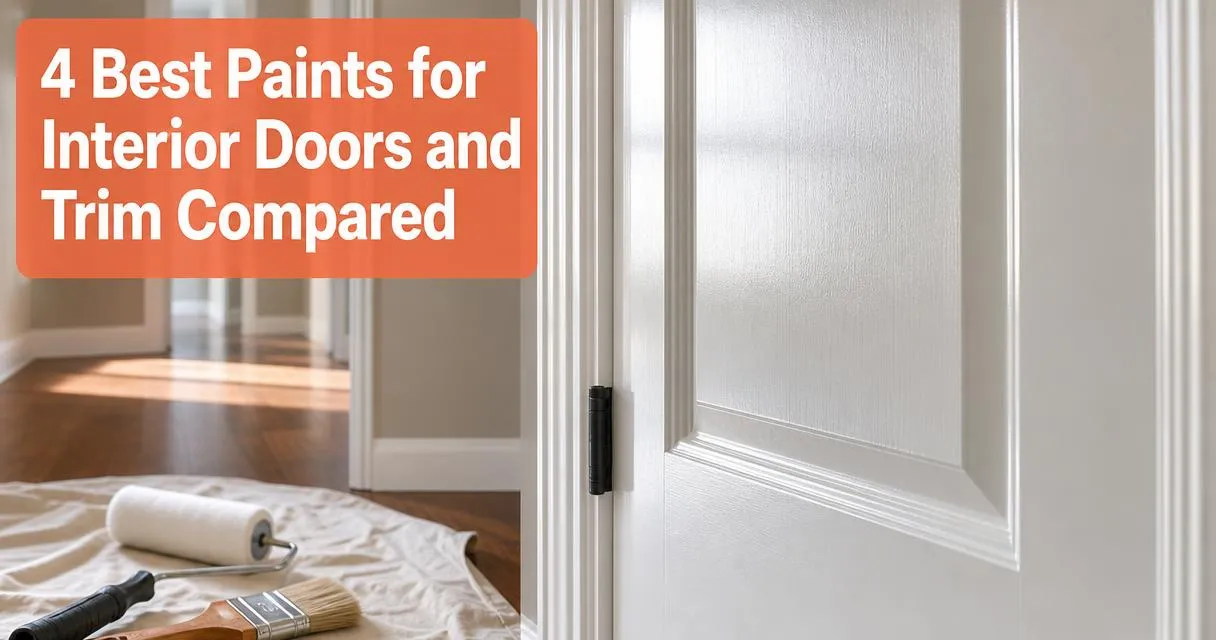
There’s no single best paint for interior doors and trim. The right choice depends on your surface condition, household traffic, and desired finish smoothness. Modern water-based enamels match oil paints in durability, while alkyd-modified paints deliver factory-smooth results without the fumes.
This comparison covers four paint types by finish quality, durability, dry time, and ease of application. Match the right product to your specific doors and trim.
Key Takeaways
- Semi-gloss is the most popular sheen for doors and trim because it highlights edges and resists wear. Satin works better on lower-traffic trim where you want a softer appearance.
- Water-based acrylic enamels now rival oil paints for smoothness, with far less odor and faster recoat times.
- Self-leveling formulas minimize visible brush marks, a critical feature for DIYers who can’t match a professional’s stroke technique.
- Primer is required on bare wood or when making drastic color changes, no matter which topcoat you choose.
- Sherwin-Williams and Benjamin Moore dominate the trim paint category with specialized formulas that outperform standard wall paints.
- Alkyd-modified enamels produce the smoothest finish but need 16+ hours between coats. Standard acrylic latex dries faster but shows more texture.
- Urethane-modified paints cost more than basic acrylic enamel but deliver maximum scrub resistance for high-traffic homes.
Related Reading
A practical guide to paint-and-primer-in-one formulas, when they work on interior doors and trim, and their limitations.
Best Paint For Interior Doors And Trim Compared
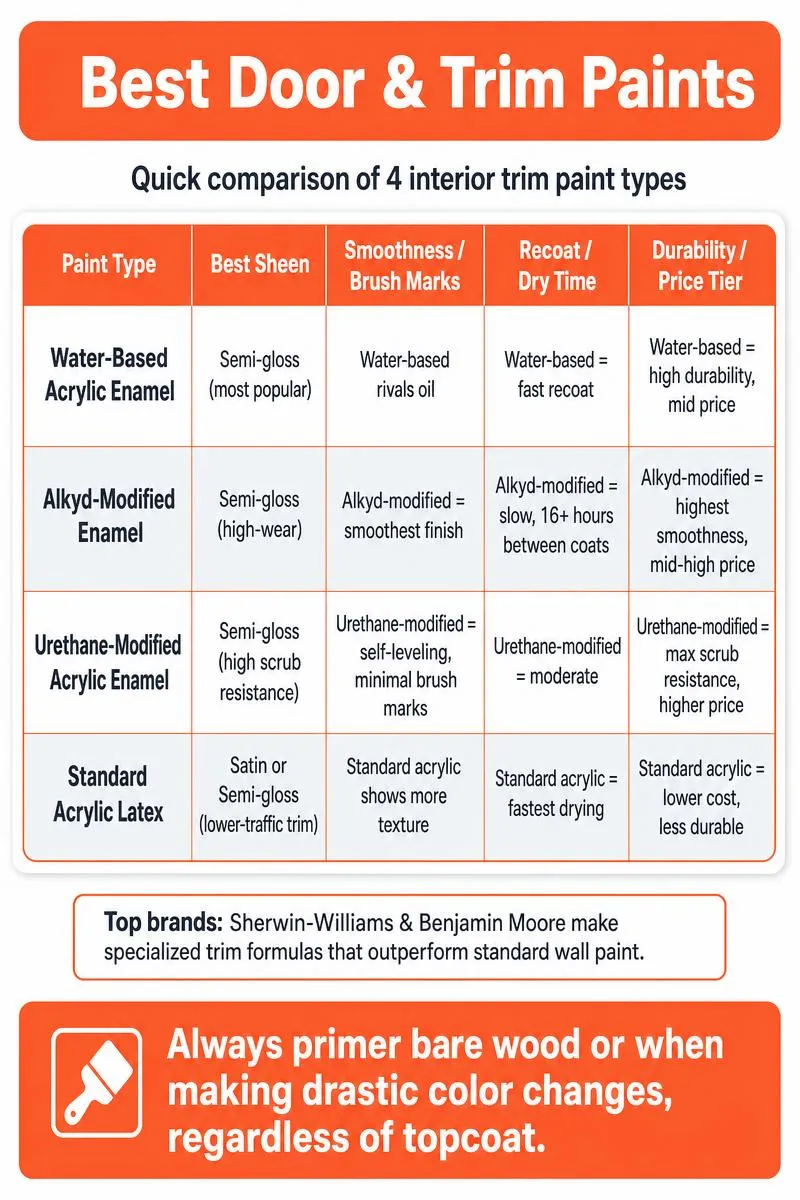
| Paint Type | Best Sheen | Smoothness / Brush Marks | Recoat / Dry Time | Durability / Price Tier |
|---|---|---|---|---|
| Water-Based Acrylic Enamel | Semi-gloss (most popular) | Water-based rivals oil | Fast recoat | High durability, mid price |
| Alkyd-Modified Enamel | Semi-gloss (high-wear) | Smoothest finish | Slow, 16+ hrs | Highest smoothness, mid-high price |
| Urethane-Modified Acrylic Enamel | Semi-gloss (high scrub resistance) | Self-leveling, minimal marks | Moderate | Max scrub resistance, higher price |
| Standard Acrylic Latex | Satin or Semi-gloss (lower-traffic) | Shows more texture | Fastest drying | Lower cost, less durable |
What Is Water-Based Acrylic Enamel?
Water-based acrylic enamel like Sherwin-Williams ProClassic is a latex paint formulated specifically for trim, doors, and cabinets rather than walls. It dries harder than standard latex and levels smoother than wall paint, though not as smoothly as alkyd-modified formulas.
Best for: repainting wood doors, MDF trim, and any surface that already has a sound base coat. ProClassic works well when you’re refreshing trim in the same or similar color without major surface prep.
The main strengths are fast drying with low odor. It’s typically touch-dry in 1-2 hours with 4 hours between coats. Cleanup happens with soap and water, and the paint resists yellowing over time unlike oil-based options.
The main weakness is that water-based acrylic enamel telegraphs every surface flaw. You’ll see every dent, drip, or sanding skip in the finished coat. It also requires primer on bare wood or MDF, and brushing technique matters more than with self-leveling alkyd formulas.
What Is Alkyd-Modified Enamel?
Alkyd-modified enamel like Benjamin Moore Advance combines water cleanup with oil-paint performance by blending acrylic resin with alkyd compounds. The result is a paint that flows like traditional oil paint but cleans up with soap and water.
Best for: high-traffic doors, new trim installations, and any project where you want a cabinet-grade smooth finish. Advance works especially well on front doors, bathroom doors, and baseboards in homes with kids or pets.
The self-leveling property is the standout strength. The paint hides brush strokes completely as it flows out over 10-15 minutes, producing a factory-smooth surface that rivals sprayed finishes. It also hardens to a durable film that resists scuffing and edge chipping better than standard acrylics.
The main weakness is extended cure time:
- The paint is dry to the touch in 4 hours, but 16 hours are required between coats
- A full week is needed before the paint reaches maximum hardness
- Doors can’t be closed firmly for 24-48 hours without sticking
- This complicates bathroom and bedroom projects where doors must function during cure
What Is Urethane-Modified Acrylic Enamel?
Urethane-modified acrylic enamel like Sherwin-Williams Emerald Urethane adds urethane resin to a water-based acrylic base. This creates a paint that cures harder than standard acrylic and stands up to frequent wiping.
Best for: premium trim jobs, doors in homes with young children, and any surface that needs maximum washability. Emerald Urethane makes sense for mudroom doors, kitchen trim, and stair railings that see constant hand contact.
Scrubbability is the defining strength. The cured film resists repeated cleaning without dulling, outperforming both standard acrylic and alkyd-modified paints in abrasion tests. It also self-levels better than basic acrylic, though not quite as smoothly as alkyd formulas.
Premium pricing is the clear weakness. A gallon costs notably more than mid-tier enamels. The performance justifies the cost in high-wear areas, but it’s overkill for guest bedroom trim or ceiling crown molding.
Related Reading
A roundup of durable cabinet paints and finishes you can apply to doors and trim for a smooth, long-lasting result.
What Is Standard Acrylic Latex?
Standard acrylic latex like Behr Premium Plus is a quality wall paint that works adequately on trim and doors when durability isn’t the top priority. It uses the same chemistry as wall paint, with higher solids content for better coverage.
Best for: budget refreshes, rental properties, and simple trim repaints where you’re matching an existing color. Premium Plus makes sense when painting seldom-used closet doors or refreshing bedroom baseboards that don’t take abuse.
Affordability and easy cleanup are the main strengths. A gallon costs half of specialty enamels, and it cleans up with water just like any latex wall paint. Dry time is fast at 1-2 hours between coats, and the paint doesn’t require special brushes.
Less self-leveling means more visible brush marks, especially under raking light from windows. Standard latex also chips more easily at door edges and doesn’t harden like enamel formulas. You’ll see wear patterns sooner in high-traffic spots where urethane or alkyd paints would still look fresh.
Head-to-Head
Finish quality:
- Alkyd-modified and urethane enamels produce the smoothest results
- Alkyd formulas like Benjamin Moore Advance self-level more aggressively for a slight edge
- Water-based acrylic enamel finishes smoother than standard latex but shows more texture than alkyd or urethane options
Durability:
- Urethane-modified enamel wins for scrub resistance, maintaining sheen through hundreds of cleaning cycles
- Alkyd-modified paints come in second for impact and edge-chip resistance
- Standard latex shows wear first in high-contact areas
DIY ease:
- Acrylic enamel and standard latex are most forgiving for beginners because they dry fast for quick fixes
- Alkyd and urethane paints demand more patience with extended working times
- Self-leveling formulas hide mediocre brush technique through automatic flow-out
Value:
- Standard acrylic latex delivers acceptable results for the lowest cost
- Water-based acrylic enamel rivals alkyd at mid-tier price, offering the best balance of performance and cost
Which Should You Choose?
- For a budget rental or starter home: Standard acrylic latex in semi-gloss handles basic refreshes cheaply. It won’t last as long or look as smooth, but it gets the job done before a lease renewal or quick sale.
- For a family home with kids and pets: Urethane-modified enamel justifies the premium price on high-traffic doors and trim that get touched, bumped, and wiped down constantly. The scrubbability and impact resistance pay off over years of heavy use.
- For a quick same-color refresh: Water-based acrylic enamel like ProClassic dries fast for same-day results. You can complete a full room in one day with minimal odor, and the finish holds up better than standard latex.
- For new trim or a premium finish: Alkyd-modified enamel with a quality primer delivers a factory-smooth result. Plan for the extended dry time, but expect a finish that looks factory-applied rather than hand-brushed.
Related Reading
Sherwin-williams paint comparison
A brand comparison that breaks down performance differences between Sherwin-Williams Latitude and SuperPaint to help…
FAQs
1. Should interior doors be semi-gloss or satin?
Semi-gloss is the standard choice for interior doors because it highlights edges and resists wear while standing up to hand oils and cleaning. Satin works if you want a softer look and the door sees minimal contact, like a spare bedroom or office door.
2. Should you paint a door with a brush or roller?
Brush application produces the smoothest finish on paneled doors because you can work paint into corners and profiles that rollers skip over. Roll flat slab doors with a 4-inch foam roller, then tip off with a brush to eliminate texture.
3. What type of paint should you use on internal doors?
Use a dedicated trim enamel rather than wall paint. Choose alkyd-modified for the smoothest brush-applied finish or urethane-modified for maximum durability in high-traffic spots. Standard acrylic enamel works fine on low-use doors like closets or guest rooms.
4. What is the best sheen of paint for trim and doors?
Semi-gloss remains the most popular sheen because it’s durable and easy to clean while creating definition between trim and walls. Satin works on lower-traffic trim like crown molding or picture rail where you want less shine.
5. Can I paint trim without sanding first?
You can skip sanding if the existing paint is sound, clean, and deglossed with a liquid deglosser like TSP substitute. Bare wood, glossy surfaces, and peeling paint all require sanding for proper adhesion.
6. How long between coats for trim and door paint?
Recoat times vary by formula:
- Water-based acrylic enamel: 4 hours between coats
- Alkyd-modified: 16 hours between coats
- Urethane-modified: 4-6 hours between coats
Check the can label because humidity and temperature extend these times.
7. What is the best white paint for trim and baseboards?
Benjamin Moore Advance in Simply White and Sherwin-Williams ProClassic in Extra White are the two most common choices. Simply White leans slightly warmer while Extra White reads crisp and clean. Match the white to your wall color’s undertone.
Final Verdict
- Alkyd-modified enamel delivers the best overall finish for doors and trim when you can work around the extended dry time. Benjamin Moore Advance produces results that look sprayed rather than brushed, and the durability justifies the wait.
- Water-based acrylic enamel offers the best overall balance of price, performance, and convenience. Sherwin-Williams ProClassic costs less than premium options, dries fast enough to finish projects in one day, and outlasts standard latex by years in normal traffic conditions.
- Standard acrylic latex remains acceptable for low-traffic areas and budget-constrained projects, but expect to repaint sooner and accept more visible brush marks. Buy a quart of your chosen paint and test on a hidden section first before committing to gallons for the whole house.
Colorado homeowners in the Denver metro area can get local advice on paint selection for doors, trim, and baseboards, and we will help match paint type and sheen to your home’s traffic patterns and finish expectations. Sherwin-Williams and Benjamin Moore products are widely available at stores throughout the Front Range, making it easy to source the finishes you prefer. For project planning and a clear rundown of options, visit our interior painting services or call 720-831-8998.