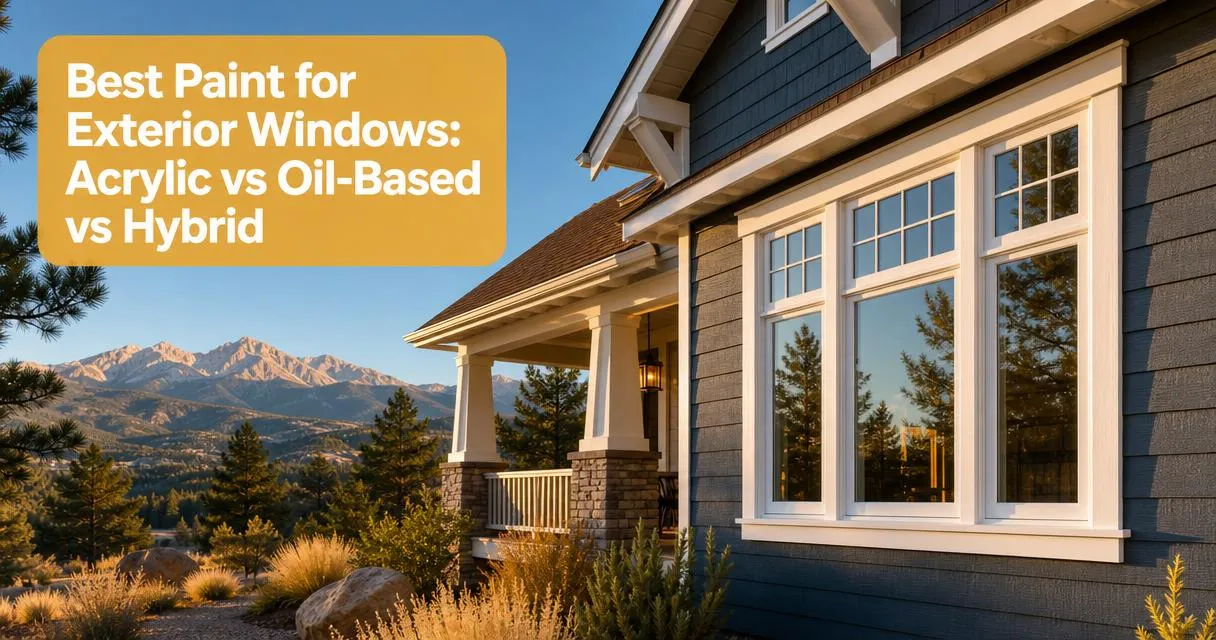
No single paint type works best for every exterior window frame. Acrylic paints excel on vinyl frames in moderate climates, while oil-based formulas provide superior durability on wood frames facing harsh weather. Hybrid paints split the difference but cost more.
Key Takeaways
- Acrylic paints offer easiest cleanup and fastest drying for most DIYers
- Oil-based paints provide superior adhesion and durability on wood frames
- Hybrid paints combine benefits but cost more than traditional options
- Frame material (wood vs vinyl vs metal) determines paint compatibility
- Climate affects paint performance more than brand selection
- Proper surface prep matters more than premium paint choice
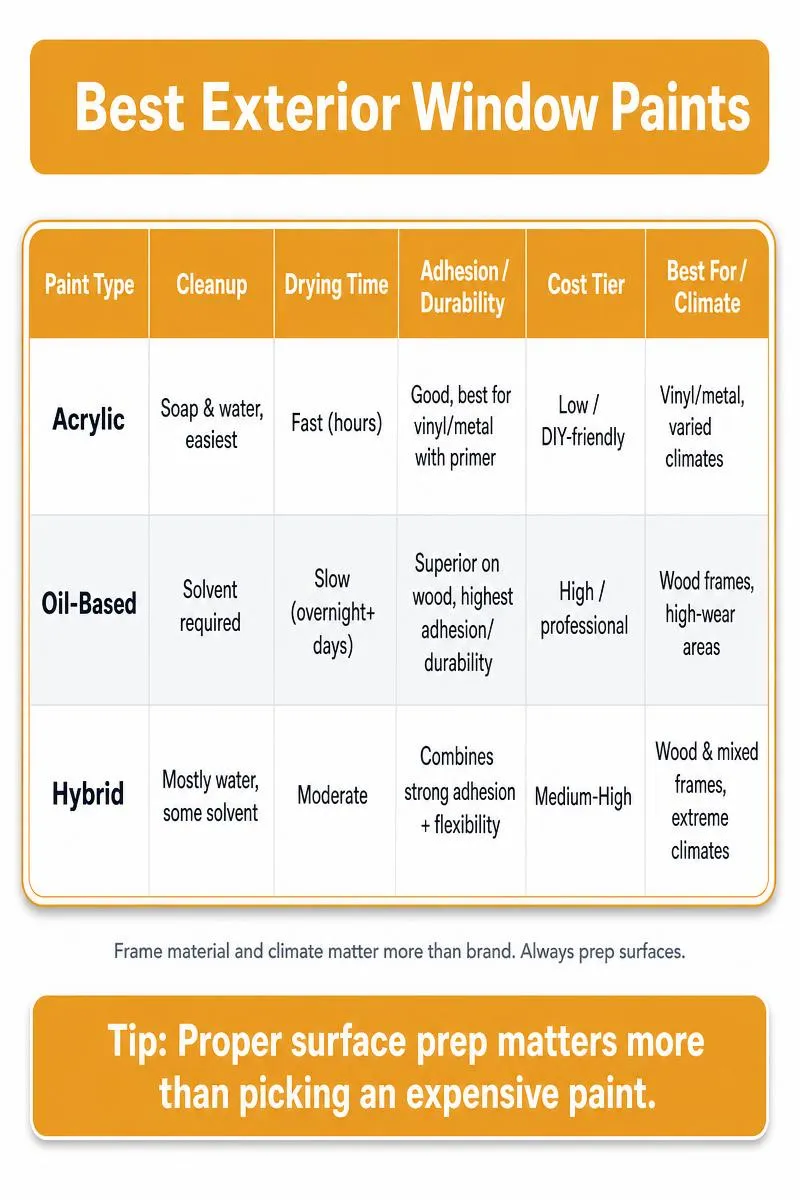
Best Paint For Exterior Windows Compared
| Paint Type | Cleanup | Drying Time | Adhesion / Durability | Cost Tier | Best For / Climate |
|---|---|---|---|---|---|
| Acrylic | Soap & water, easiest | Fast (hours) | Good; best for vinyl/metal w/ primer | Low / DIY-friendly | Vinyl/metal; varied climates |
| Oil-Based | Solvent required | Slow (overnight+ days) | Superior on wood; highest adhesion | High / professional | Wood frames; high-wear areas |
| Hybrid | Mostly water; some solvent | Moderate | Strong adhesion + flexibility | Medium-High | Wood & mixed frames; extreme climates |
Quick Comparison Table
Acrylic Paint:
- Durability: multiple years on most surfaces
- Dry time: fast recoat possible
- Cleanup: soap and water
- Best for: vinyl and aluminum frames in moderate climates
- Cost: budget-friendly option
- Application: easy for beginners
Oil-Based Paint:
- Durability: longest-lasting option
- Dry time: slower curing process
- Cleanup: mineral spirits required
- Best for: wood frames in harsh weather zones
- Cost: moderate pricing
- Application: requires proper technique
Hybrid Paint:
- Durability: maximum longevity
- Dry time: moderate curing speed
- Cleanup: soap and water
- Best for: all frame materials and climates
- Cost: premium pricing
- Application: moderate difficulty level
Related Reading
Best exterior acrylic latex paint
A focused guide on acrylic-latex formulas, durability, and surface compatibility—useful if you want a deep dive into…
What Is Acrylic Paint?
Water-based latex formulation uses acrylic resins as the primary binder. These paints dry through water evaporation rather than chemical curing, making them the most user-friendly option for weekend DIY projects.
Best applications:
- Vinyl window frames in moderate climates
- Aluminum frames with minimal expansion
- First-time exterior painting projects
- Areas requiring no harsh solvent fumes during application
Key strengths:
- Fast recoat time lets you complete projects in one weekend
- Excellent color retention prevents chalking and fading
- Low odor makes indoor application comfortable
- Water cleanup forgives application mistakes
Notable weaknesses:
- Poor adhesion on bare wood without proper priming
- Cold weather below 50°F causes film formation problems
- Less durable than oil-based options on high-traffic surfaces
What Is Oil-Based Paint?
Alkyd resin formulation cures through oxidation rather than simple drying. This chemical process creates a harder, more durable film that bonds aggressively to wood surfaces even with minimal prep work.
Best applications:
- Wood window frames and trim in any climate
- Coastal areas with salt exposure
- Historic homes requiring traditional finishes
- Windows facing south or west with intense sun exposure
Key strengths:
- Self-leveling properties eliminate brush marks for professional results
- Superior weather resistance handles temperature swings and moisture
- Penetrates wood grain for mechanical adhesion
- Chemical cure creates flexible, durable film
Notable weaknesses:
- Solvent cleanup requires mineral spirits or paint thinner
- Strong odor necessitates proper ventilation
- Longer recoat time stretches projects across multiple days
What Are Hybrid Paints?
Alkyd-acrylic blend technology combines oil-based durability with water-based convenience. These formulations use modified alkyd resins that clean up with water while maintaining the hardness of traditional oil paints.
Best applications:
- Mixed frame materials on the same house
- Premium projects requiring maximum longevity
- Busy homeowners needing flexible application timing
- Professional contractors seeking efficiency
Key strengths:
- Durability matches oil-based performance without solvent cleanup
- Better flow and leveling than straight acrylic paints
- Faster recoat times than traditional oil-based options
- Maintains superior adhesion across different surfaces
Notable weaknesses:
- Premium pricing adds significant cost to projects
- Limited brand availability means fewer color choices
- Some formulations still require primer on certain surfaces
Related Reading
A comparative breakdown of leading exterior paint brands and their strengths, helping readers choose specific products…
Durability Head-to-Head
Oil-based paint wins decisively on wood frames exposed to harsh weather conditions. The chemical cure creates a film that flexes with wood movement while maintaining adhesion through freeze-thaw cycles.
Acrylic paint performs adequately on vinyl and aluminum frames where thermal expansion remains minimal. The water-based film stays flexible enough to handle moderate temperature swings without cracking.
Hybrid paint delivers consistent performance across all frame materials and climate conditions. While not always the absolute best choice for specific situations, it rarely fails catastrophically like mismatched paint types can.
Application Ease Head-to-Head
Acrylic paint requires minimal experience for acceptable results. Water cleanup forgives mistakes and allows immediate correction of drips or missed spots. Fast drying prevents dust contamination common with slower-curing options.
Oil-based paint demands proper brush technique to avoid lap marks and streaking. Ventilation requirements limit application windows and solvent cleanup requires careful disposal. However, self-leveling properties hide minor application flaws.
Hybrid paint offers middle-ground application with better flow than acrylic but easier cleanup than oil-based. Slightly longer open time allows brush mark correction while maintaining reasonable recoat schedules.

Which Should You Choose?
Wood frames facing harsh weather need oil-based paint for maximum adhesion and durability. The extra application difficulty pays off with longer performance versus acrylic alternatives.
Vinyl frames in moderate climates work perfectly with quality acrylic paint. The easy application and cleanup make weekend projects manageable while providing adequate durability.
Mixed frame materials or premium results justify hybrid paint costs. Single paint type handles different substrates without compromising performance on any surface.
First-time DIYers should start with acrylic paint regardless of frame material. Forgiving application prevents costly mistakes that require professional correction.
Professional-grade results demand oil-based or hybrid paint. The superior durability and finish quality justify higher material costs and application complexity.
Related Reading
Best uv resistant exterior paint
Recommendations and test results for paints with superior UV protection and fade resistance—helpful for windows exposed…
FAQs
What paint do professional window painters use?
Most professionals choose oil-based or hybrid paints for their self-leveling properties and long-term durability. The labor cost savings from fewer repaints outweigh higher material costs.
Do I need special paint to paint my outside windows?
Standard exterior house paint works fine on window frames. Avoid interior paint which lacks UV protection and weather resistance needed for outdoor exposure.
Can you paint over existing window frame paint?
Yes, but surface preparation determines success more than paint choice. Sand glossy surfaces, prime bare spots, and ensure existing paint isn’t peeling before applying new coats.
How long does exterior window paint last?
Acrylic paint lasts multiple years, oil-based paint provides longer durability, and hybrid paint offers maximum longevity. South-facing windows need repainting sooner due to intense UV exposure.
Should window frames match trim color?
Matching creates visual continuity and simplifies paint purchasing. However, contrasting colors can highlight architectural details if that’s your design preference.
Final Verdict
Acrylic paint handles most DIY window projects with the easiest application and adequate durability for vinyl and aluminum frames. The water cleanup and fast drying make weekend projects achievable without professional help.
Upgrade to oil-based paint when painting wood frames in harsh climates where maximum adhesion and weather resistance justify the extra application complexity. The superior durability provides better long-term value despite higher upfront costs.
Consider hybrid paint for mixed frame materials or when you want oil-based performance without solvent cleanup hassles. Start by cleaning and lightly sanding your window frames regardless of paint choice.
Painting exterior windows in Colorado’s variable climate requires the right paint and application. For practical guidance on paint selection and application for window trim and frames in the Denver metro area, see our exterior painting services at our exterior painting services. Call us at 720-831-8998 to talk through your project.